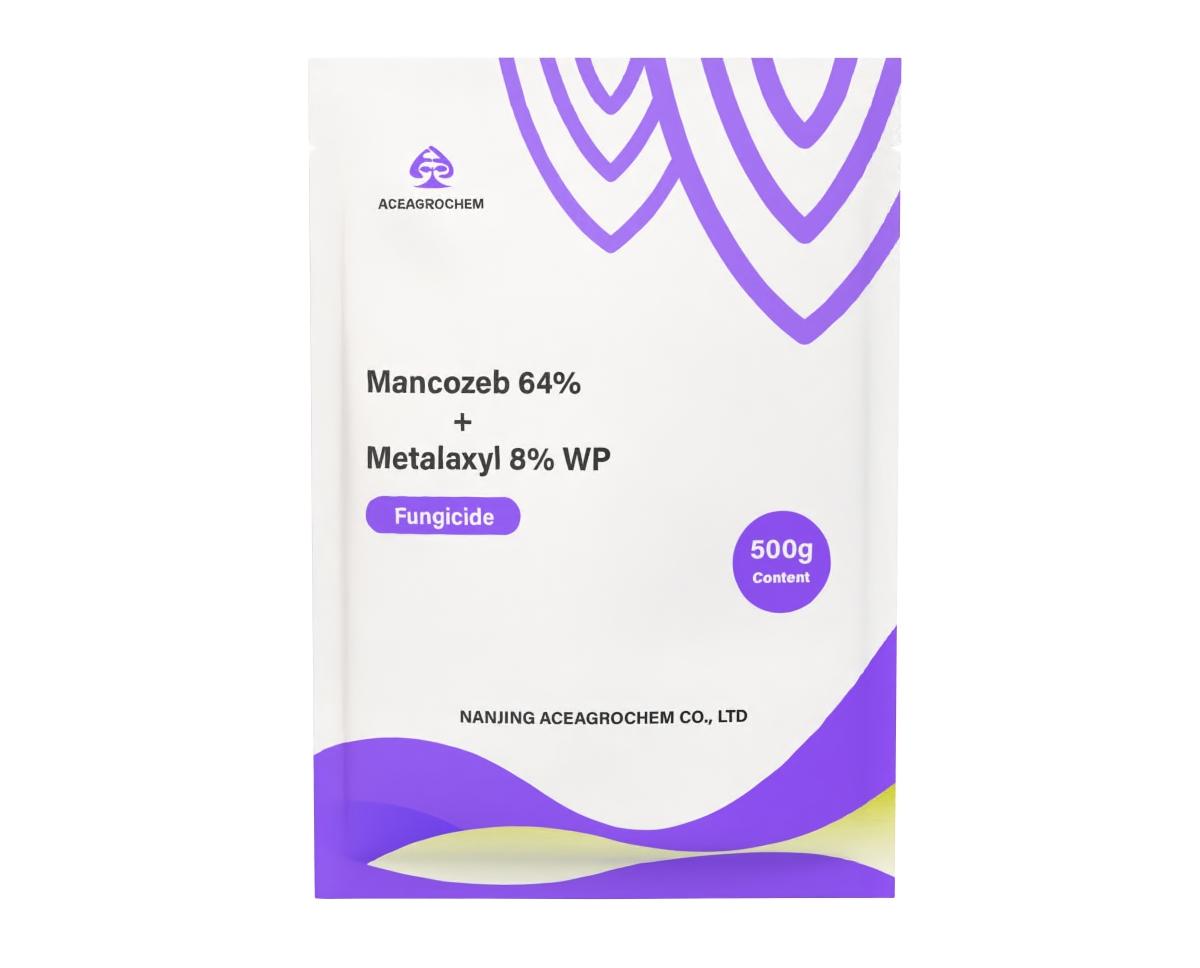
Mancozeb 64% + Metalaxyl 8% WP
Classification:
Fungicide
Formulation:
Mancozeb 64% + Metalaxyl 8% WP (Wettable Powder)
CAS NO:
Mancozeb: 8018-01-7;
Metalaxyl: 57837-19-1
USAGE:
A systemic and contact fungicide for the control of various fungal diseases in a
wide range of crops such as potatoes, tomatoes, grapes, and many others.
Effective against diseases like late blight, downy mildew, etc.
Pack size:
1kg, 5kg, 25kg/bag, or as required
Direction for Use
| Crop | Target Diseases | Dosage (64% Mancozeb + 8% Metalaxyl WP) | Application Timing | Remarks |
|---|---|---|---|---|
| Potatoes | Late blight | 1000-1500 g/ha | At the onset of disease symptoms and repeat at 7-10 day intervals | 1) REI: 24 hrs 2) Do not apply within 14 days of harvest |
| Tomatoes | Early blight, Late blight | 800-1200 g/ha | When the disease threat is high, spray at 7-10 day intervals | Add a suitable spreader-sticker for better adhesion |
| Grapes | Downy mildew | 1200-1600 g/ha | Before the onset of disease, start spraying and repeat every 10-14 days | PHI: 21 days |
Product Details
Mode of Action:
-Mancozeb acts as a contact fungicide by inhibiting the fungal enzyme system,
interfering with fungal metabolism and preventing spore germination.
-Metalaxyl is a systemic fungicide, it is absorbed by the plant and translocated
within the plant tissues, preventing the development of fungi by inhibiting the
synthesis of ribonucleic acid (RNA) in the fungi.
Benefits:
-Combination of contact and systemic action provides comprehensive disease
control.
-Broad-spectrum activity against a wide range of fungal diseases.
-Good rainfastness after drying on the plant surface.
-Compatible with many other Pesticide for tank-mixing.
Precautions:
-PPE: Wear chemical-resistant gloves, a respirator, and goggles.
-Do not apply in windy conditions to avoid drift.
-Do not use on sensitive crops without prior testing.
-Storage: Store in a cool, dry place away from food and feed, at a temperature
between 0°C and 35°C.
Environmental Hazards:
-Toxic to aquatic organisms, especially fish and invertebrates.
-Do not contaminate water bodies such as lakes, rivers, and ponds.
-Low toxicity to birds, but may be harmful if ingested in large quantities.
-Moderately persistent in soil, half-life varies depending on soil conditions.